


IBCC’s 1st Annual Meeting
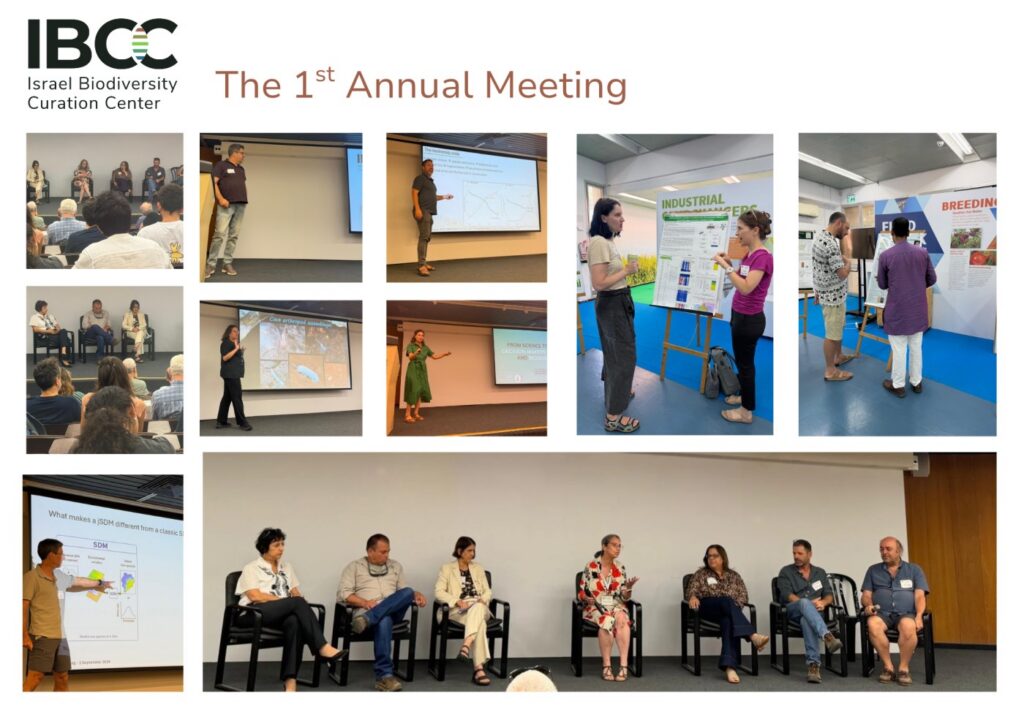
IBCC held it's first annual meeting on September 2, 2026, at the Volcani Institute, bringing together researchers, scientists, and biodiversity professionals from across Israel. The program reflected the breadth of biodiversity research in Israel, with keynote lectures, scientific presentations, posters, and a roundtable spanning taxonomy, collections, genetics, ecology, conservation, data, and policy. More than a scientific gathering, the meeting created an opportunity for a diverse community to meet across disciplines and institutions, exchange knowledge, and see the connections between their work. These encounters are an important part of building the shared knowledge, infrastructure, and collaborations needed to better document, preserve, study, and make accessible Israel’s biodiversity. The first meeting marks an important milestone for IBCC and a meaningful step in building a connected national community around biodiversity. Thank you to all the speakers, participants, and partners who made this first Annual Meeting possible.
New study: “Haplotype blocks” help wild barley adapt more efficiently to climate change
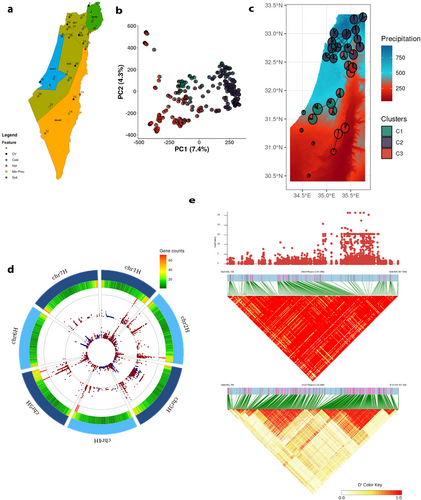
A new study published in Molecular Ecology by researchers from the IBCC offers a striking example of how plants can adapt rapidly to a changing climate with direct relevance to our mission of understanding and conserving Israel's biodiversity. The study was conducted by researchers from the University of Tel Hai in Kiryat Shmona, University of Haifa, and University of Hawaii, focusing on wild barley, the ancestor of cultivated barley, which grows across Israel's sharp environmental gradients, from Mediterranean hillsides to the desert edge. They sequenced the genomes of 300 wild barley plants from 30 sites and grew 3,600 offspring in a common garden over three years. Rather than scattered single genes, they found that rapid and synchronized adaptation is driven by clusters of genes they call "haplotype blocks” which are inherited together as one package, bundling drought-, heat-, and flowering-time-related genes that let populations respond to environmental pressure. By combining genetics with climate models, the team flagged populations at high risk under future climate scenarios including areas that ecological models alone missed. The study underscores a core IBCC theme: genomic data can reveal conservation priorities that ecological surveys may miss, and wild relatives of crop plants are a resource worth protecting both for biodiversity and for food security. For the full article, continue here > https://onlinelibrary.wiley.com/doi/10.1111/mec.70540
Second IBCC All Partners Meeting
On June 1, 2026, IBCC partners gathered for the consortium’s second annual partners meeting to share progress, challenges, and next steps across the project. Participants presented updates on field sampling efforts, genomic data generation, phylogenetic analyses, and the development of the IBCC integrated biodiversity database. Discussions highlighted significant progress in plant sampling and sequencing, improvements in coordination between field teams, and ongoing work to build the technical infrastructure that will connect genomic, spatial, taxonomic, and ecological data. The meeting also provided an opportunity to strengthen collaboration across research groups, identify areas for improved data integration, and align future sampling and database development efforts. Partners agreed to continue refining coordination mechanisms and to increase the visibility of ongoing activities through the project website and shared data platforms.
Save the Date: IBCC Annual Meeting
We are excited to announce the official date of our 1st annual IBCC meeting: September 2, 2026 | Volcani Institute The conference will bring together researchers and partners from across disciplines to share insights, explore connections, and strengthen the collaborative foundation of the IBCC platform. More details are coming soon.
First Joint Sampling Day – Pura Nature Reserve
We headed out to Pura Nature Reserve for our first official joint sampling day—bringing together multiple teams in the field. Chosen for its central location and dense populations of annual species, Pura offered a realistic testing ground for the challenges expected across many sampling sites. The day focused on aligning methodologies, while also surfacing practical field constraints—from accessibility issues to coordination across teams with varying levels of field experience.

First All-Partners Meeting
For the first time, all IBCC partners gathered to share updates on their work and reflect on progress across the project. The meeting created a shared picture of where things stand—across fieldwork, lab processes, and data infrastructure—and strengthened alignment moving forward.
Field collections – Anemone coronaria
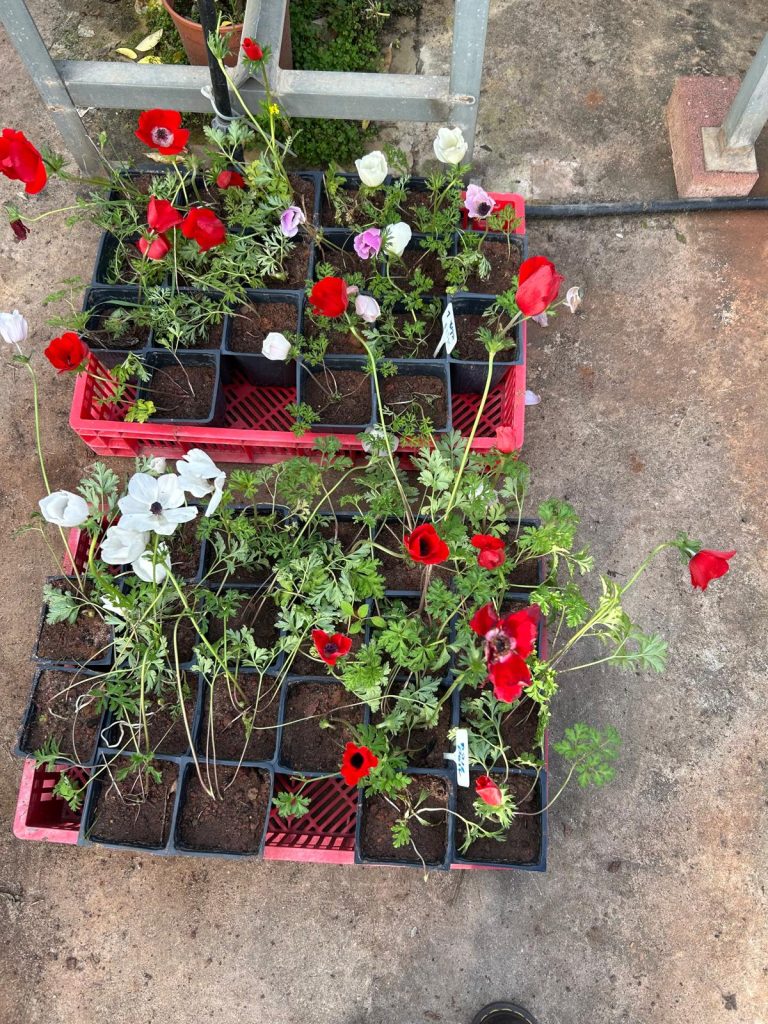
Anemone coronaria was selected as a key species for 2026, with collections carried out across multiple sites. Due to its biology as a geophyte, tubers were collected instead of seeds—allowing researchers to preserve traits such as flower color. After documentation, the tubers are replanted for continued growth under controlled conditions at the Gene Bank facilities. After future genetic sampling, the tubers will be returned to their collection sites.
Building a reference genome – Trifolium israeliticum
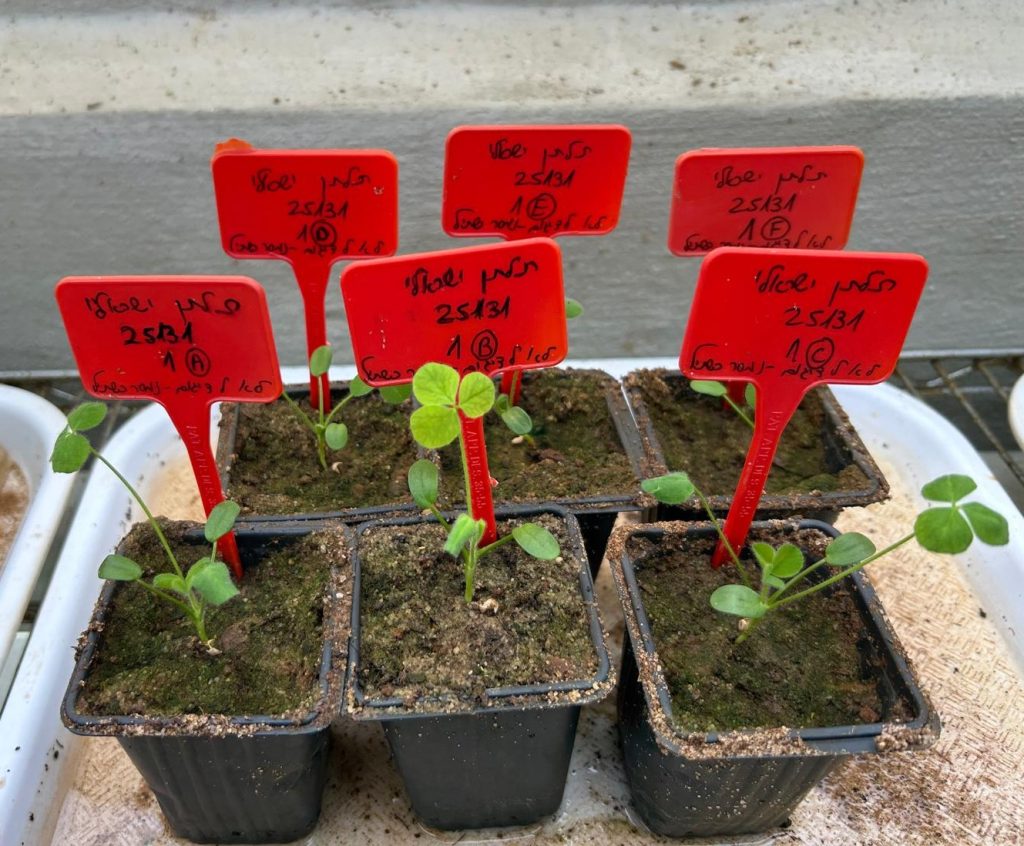
As part of IBCC’s pilot work, Trifolium israeliticum—an endangered species—has been cultivated to support the creation of a reference genome. This effort builds on both recent and historical seed collections, involving multiple growth cycles to ensure stable and reliable genetic material. The plants shown here were grown specifically for this purpose, reflecting a long-term investment in genomic infrastructure.
Transition to soil – Cichorium endivia
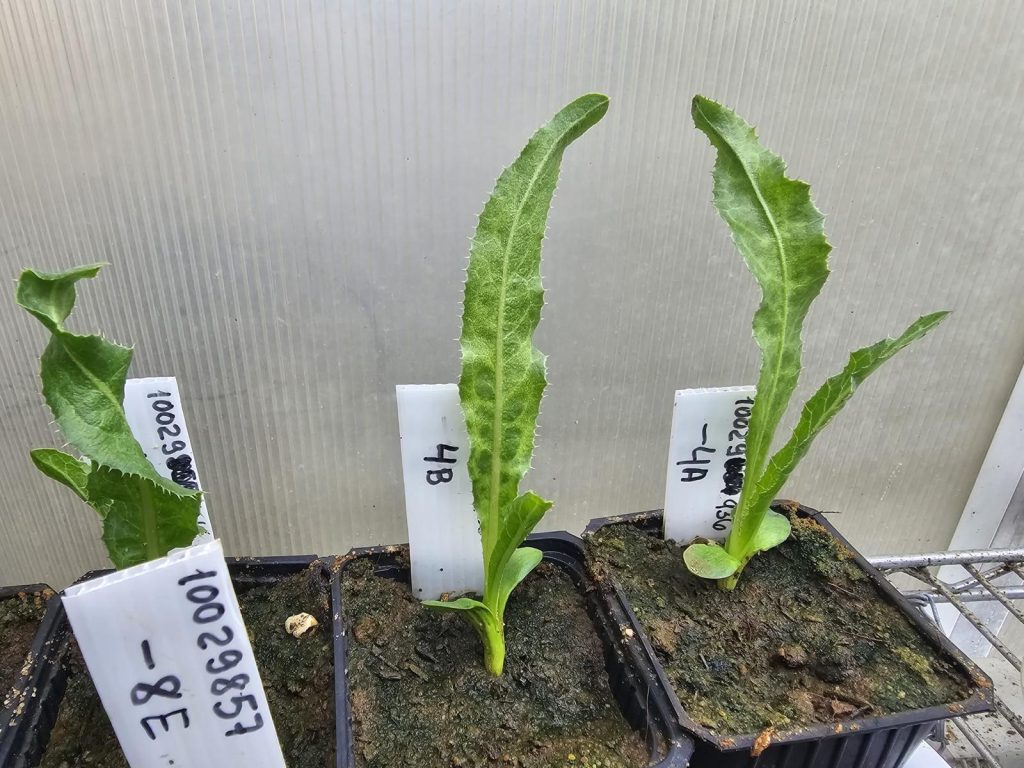
Seedlings of Cichorium endivia were transferred from agar plates to soil, marking a key step in early plant development. Seeds collected from multiple sites across the country were germinated in the lab, and within approximately three months reached a stage suitable for continued growth and future sampling.
From seed to plant – Gundelia tournefortii
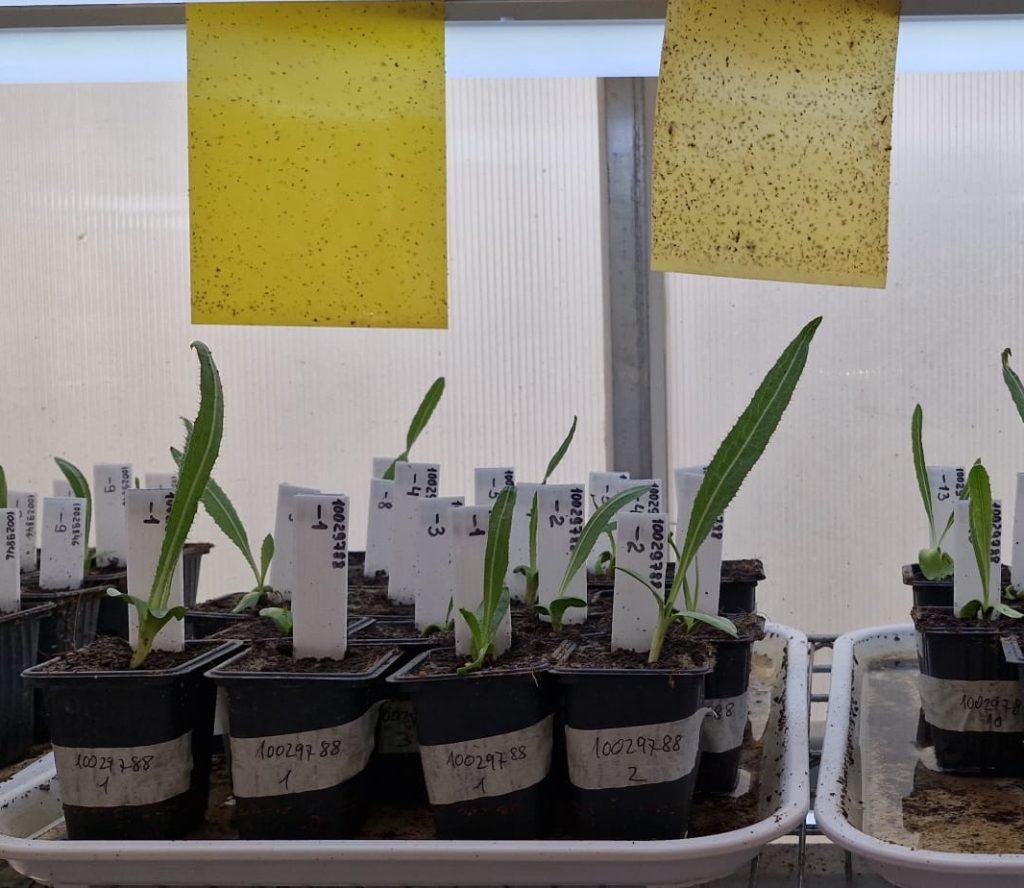
Several months after germination, Gundelia tournefortii plants—collected from sites including the Carmel and southern Mount Hebron—have reached the stage where they are ready for leaf sampling. On average, it takes 4–5 months from germination to reach this stage, highlighting the time investment required to move from seed collection to usable biological material.
Early germination phase – Gundelia tournefortii
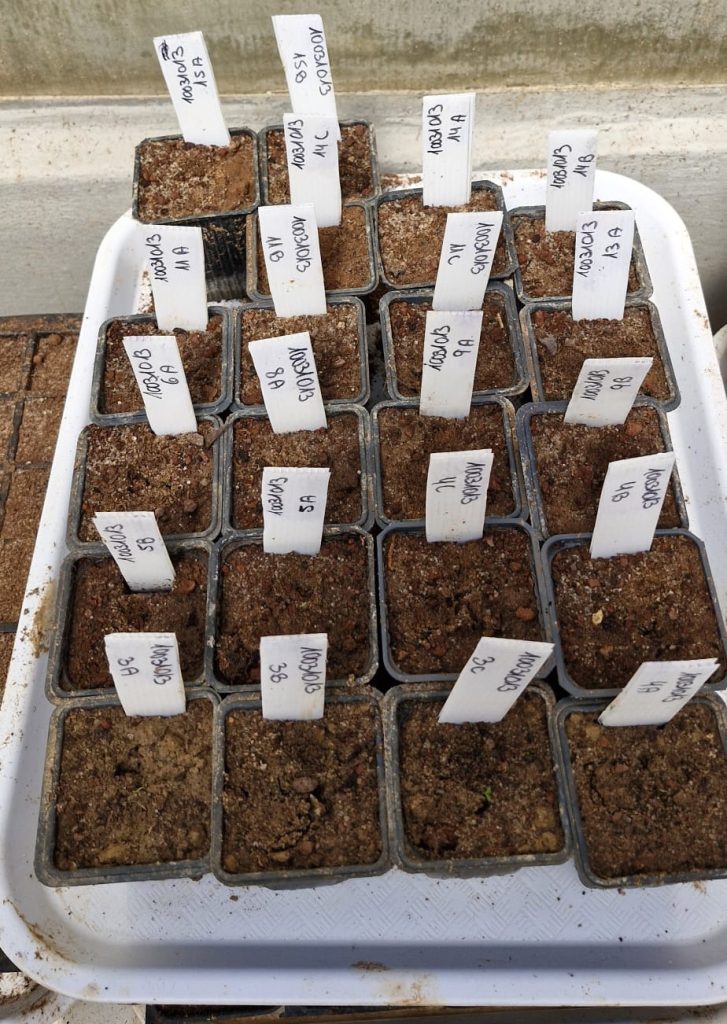
Seeds of Gundelia tournefortii (protected species), collected earlier in the year from the Lower Jordan Valley, began their germination process under controlled conditions. Following field collection, seeds were cleaned, sorted, and transferred to the germination lab. This stage marks the transition from fieldwork to lab-based growth—laying the foundation for future genetic sampling.
Shaping the next phase: Key species selection for 2026
The IBCC team came together to define the key species that will guide our 2026 research efforts. This milestone marks an important step in aligning ecological, genomic, and field priorities—ensuring that the species we focus on will enable meaningful cross-disciplinary insights. The meeting concluded with the selection of 25 key species that will guide the project’s research focus for 2026.